Potenza RF microneedling and the questions to ask first
Prepare for a consultation about acne scars and texture, including what radiofrequency adds to microneedling and what the FDA safety notice covers.
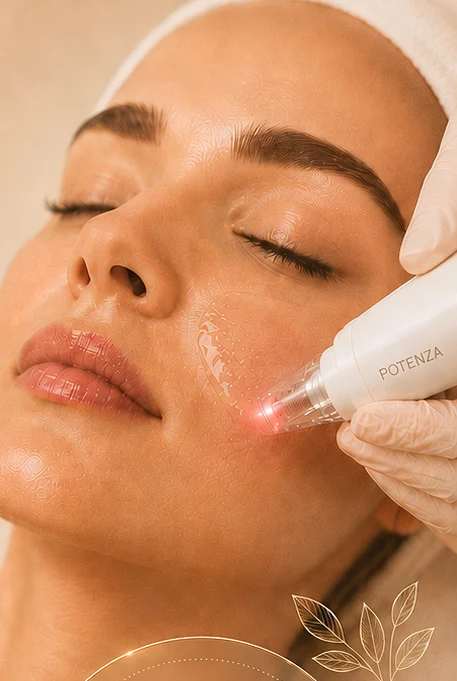
A depression left by acne and a flat brown mark can look equally prominent in a photograph. They are different problems. If you are considering Potenza, ask the clinician to identify which marks are scars, which are changes in colour, and which specific feature they expect radiofrequency microneedling to improve.
What radiofrequency adds to needling
Potenza is a radiofrequency microneedling device. Fine needles enter the skin and deliver energy that creates small areas of heat in the tissue. This adds a thermal effect to the punctures made by conventional microneedling. The intended response includes tissue repair and remodelling. The added heat also introduces the possibility of thermal injury.
Research reviews report improvement in some depressed acne scars after fractional radiofrequency microneedling. The studies use different devices, scar grading scales and treatment schedules. An average from that literature cannot predict how much a particular scar will soften with Potenza. Ask to see a healed example that resembles your scar pattern and skin tone.
What the safety notice means for a decision
In October 2025, the US Food and Drug Administration warned of serious injuries reported with certain uses of RF microneedling. Reports included burns, scarring, loss of underlying fat, nerve damage and disfigurement. Some injuries required surgery. The notice addresses a class of devices and does not give a complication rate for Potenza.
Ask who will perform the procedure, what training they have with the device and how they judge whether it suits the area you want treated. Tell them about recent acne medication, previous procedures, active breakouts, raised scars or persistent darkening after an injury. Ask whether treating the acne first or using a different approach would better address your main concern.
What to settle before going home
Temporary redness, swelling, pinpoint bleeding and tenderness can follow microneedling. Get written advice on cleansing, sun exposure and when to restart makeup and active skin-care ingredients. Ask what changes should be settling each day and who can examine you if they worsen.
Promptly contact the treating clinician for worsening pain, blisters, spreading redness, drainage or new numbness. Photographing a change can help explain it when you call. An examination may still be needed.
Common questions
Can I have RF microneedling at home?
The FDA describes RF microneedling as a medical procedure and advises against home use. It recommends a licensed health professional with training and experience using these devices.
How will I know whether another session is worthwhile?
Agree on a scar or small area to photograph before the first session. Arrange a review after healing and discuss any pigment change, discomfort or small improvement before committing to further treatment.