Thermage for facial wrinkles and skin laxity: what change is realistic?
Which part of the change bothers you?
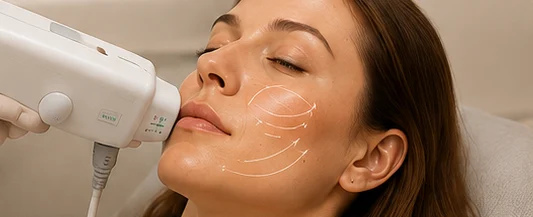
Consider the lower face in a photograph taken in ordinary light, with the jaw relaxed. Someone may notice fine creasing in the skin beside the mouth. Another person looking at a similar photograph may be concerned about a deep hollow or a prominent fold. Thermage uses monopolar radiofrequency to heat tissue through a tip applied to the skin surface. It is an option to discuss for selected wrinkles and some changes in skin firmness. It cannot replace missing facial volume or move a substantial fold into a new position the way surgery can.
During a consultation, show the change with your face resting and then with your usual expression. A line that appears only when you smile raises different questions from skin that looks creased at rest. A person seeking a slight improvement in texture might be satisfied by a result that would disappoint someone expecting a visibly elevated jawline. Describe what you would like to notice when you look in the mirror. Then ask the clinician to identify which parts of that request they believe the treatment could address and which are likely to remain.
How surface radiofrequency differs from other treatments
The Thermage handpiece delivers radiofrequency energy without intentionally puncturing the skin. The system is designed to heat tissue while protecting the surface. The heat can lead to changes in collagen over time. Cooling and other comfort features depend on the equipment and treatment setup. You may feel heat or discomfort during the procedure. There is no reason to endure a sharply painful or persistently hot spot in silence. Tell the provider what you are feeling so they can reassess the area as treatment proceeds.
The term radiofrequency appears in several treatment names. In RF microneedling, electrodes enter the tissue. With external monopolar RF, the applicator stays on the surface. The two approaches have different intended effects and different safety information. Ultrasound-based treatments use another form of energy altogether. If you are comparing offers, ask for the exact procedure, the site, the intended change and the recovery you should plan for. A quote for the full face may cover a different set of areas from a quote for the lower face and neck.
What research can and cannot predict for an individual
A retrospective study of more than six hundred monopolar RF facial treatments described clinicians' experience with outcomes and tolerability. A retrospective study looks back at care already delivered. Patient selection and changes in technique over time can influence what the investigators see. A newer randomized study compared two monopolar RF devices over six months. This kind of comparison can help answer whether the devices performed similarly under study conditions. It does not tell you that either device will produce a surgical lift, or that everyone treated will see a change they consider worthwhile.
Look carefully at how a result is presented. If a before photograph shows the chin tucked down and the after photograph shows the neck extended, the apparent difference may be partly positional. Ask to see comparable angles, a neutral expression and an interval long enough for early swelling to settle. Find out whether the person pictured also received fillers, ultrasound, a laser or a change in skin care. An image showing several interventions cannot establish how much of the difference came from Thermage alone.
Safety screening includes implants and earlier treatments
Solta Medical's Canadian patient information says that people with a cardiac pacemaker, defibrillator or another implanted electrical device should not undergo Thermage. If you carry an implant card, bring it and tell the provider before scheduling. A device that is rarely discussed in everyday life may still be essential to this decision. Also share a history of operations, fillers and other cosmetic treatments in the intended area. Identify where they were performed and when, even if the result is now barely noticeable.
The manufacturer lists circumstances in which the system has not been studied, including use over skin fillers, during pregnancy or breastfeeding, and in people with certain medical conditions. Ask how that information applies to your own situation. Tell the clinician about diabetes, altered sensation, healing problems or a previous burn from an energy-based treatment. If a particular area is numb after surgery, make sure the provider knows before the procedure begins. Decisions about candidacy should come before choosing a package or buying a particular number of pulses.
What recovery can look like
Mild redness and swelling can occur after treatment. The Canadian manufacturer notes that swelling may occasionally last for weeks. Ask what is expected for the site being treated, particularly if you are scheduling around a meeting, travel or a family event. Keep the written aftercare advice and a way to contact the treating team. If you already have an asymmetric smile, a patch of numbness or a small contour irregularity, point it out beforehand so both you and the clinician can distinguish it from a new finding.
Less frequent complications described by the manufacturer include burns, blisters, changes in pigmentation, altered sensation and surface irregularities. Seek prompt medical advice for blistering, worsening pain, weakness or a new persistent change in sensation. A new indentation may become noticeable after the early recovery period. Record when you first saw it and arrange an assessment before booking another energy treatment. A clear photograph in daylight can help describe a concern, although the clinician may need to see and feel the area to understand what has changed.
Set a review point before committing to more treatment
Pick a simple way to judge your own result. For the lower cheek, two photographs from the same angle with your face relaxed can be more useful than a collage of different expressions. For fine lines, compare them in the same light and at a normal viewing distance. Ask when the effect should reasonably be assessed and how much variation to expect. A slight change that is meaningful to you matters more than an impressive-looking percentage for a feature you never wanted to treat.
At follow-up, explain which changes you can see in ordinary life and whether treatment met the goal you originally set. If the remaining concern is loss of volume or substantial loose skin, repeating thermal treatment may offer little additional benefit for that feature. Ask about the option of stopping and about alternatives with different recovery or risk profiles. The clinic's facial treatment overview can help you compare categories. For a decision about your own face, bring your treatment history and a photograph that accurately shows the concern to a consultation.