Surface radiofrequency and facial skin firmness
Understand the proposed treatment
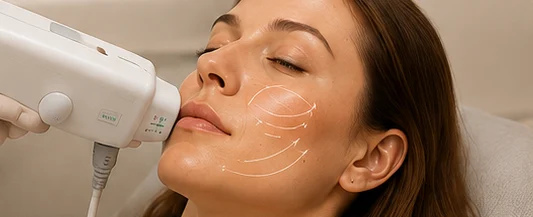
Surface radiofrequency uses electrical energy to heat tissue through an applicator. RF microneedling delivers energy through needles and carries a different risk profile. Clarify which is being offered. If your main concern is facial hollowing or a fold that appears only with movement, a skin-tightening study may not answer the question you actually have.
Set expectations for a gradual result
Research describes changes in laxity and skin appearance, with considerable variation between devices and methods. A slight improvement in firmness may be worthwhile for someone seeking low downtime, while considerable excess skin may remain. Ask how many visits are anticipated and the total cost before comparing it with another option.
Consider the treatment area and your history
Explain any implanted electrical device, altered sensation, recent procedure or active rash. The clinician should check the instructions for the exact system. Heat can cause injury, and persistent pain, blisters or an unexpected contour change warrant review. Evaluate results with the same expression, camera angle and lighting after early swelling settles.
What changes when you move your head?
At a consultation, point out the particular change you first noticed. A crease beside the mouth that remains visible at rest, a shadow under the jaw when you look down at your phone and skin that gathers when you smile can all be described as sagging. They arise from different combinations of skin, fat, bone structure and muscle movement. Ask the clinician to look at the area while you sit upright, relax your jaw and turn slightly to one side. A treatment recommendation should relate to the feature you see in that position.
A modest change in skin firmness can be meaningful if your goal is a slightly smoother outline along one cheek. Someone who wants an extensive fold of neck skin removed has a different decision to make. Try describing the smallest change that would make the visit worthwhile. For example, you may wish to soften a crease visible in conversation while accepting the line that shows when you look down. That detail helps the clinician explain whether an external heating treatment, a surgical consultation or simply following the area over time fits your preferences.
How to read a study about facial tightening
A prospective study of surface monopolar RF followed patients treated on the face and upper neck. Investigators reported improvement in some areas at six months, including the lower cheeks and folds near the mouth. This finding describes the response of the people enrolled using the particular system and assessment method in that study. A score indicating improvement can represent a subtle change. It does not specify how many millimetres your jawline might lift or predict whether someone else will notice. Ask to see standard photographs taken after the initial skin reaction had settled.
Another study enrolled twenty people with mild to moderate looseness and treated one side of each person's face with RF and the other with focused ultrasound. This design helps account for differences in age and skin between participants. It also tells you which patients the findings apply to most directly. If you have considerable excess skin after weight loss, the experience of a small group with milder changes may offer little guidance. Ask how closely the study participants resemble you in the feature that matters most, including the amount of looseness and the location being treated.
Which kind of radiofrequency is being offered?
During surface RF, the applicator is placed against intact skin. The clinician controls the delivery of heat to tissue and monitors contact, comfort and the skin response. The pattern of heating depends on the system and how it is used. A result reported for one applicator cannot be assumed for every facial treatment labelled RF. Ask the clinician to show you on a mirror the boundary of the proposed treatment, particularly if you wish to include the eyelids, the area below the chin or the front of the neck. Those locations need specific consideration.
If your main concern is pitted acne scars, the word radiofrequency may have come up during a very different discussion about needles and skin texture. Read the clinic's RF microneedling guide if that was the procedure proposed. If you have been offered Thermage, ask what the named treatment contributes to the plan for your face and what evidence applies to the particular area. Knowing the exact procedure helps you compare expected discomfort, risks and aftercare between two estimates that both say skin tightening.
Planning around dental work and previous treatments
Mention a pacemaker, implanted electronic device, metal implant, dental hardware or previous facial surgery before choosing a treatment date. Identify where each item lies in relation to the proposed area. Bring the implant information card if you have one. The specific equipment instructions and your clinical history determine whether an area can be treated and what precautions are needed. A tooth crown and a pacemaker raise different questions. Let the clinician check the relevant guidance rather than relying on someone else's eligibility after a superficially similar procedure.
Describe previous fillers, threads, surgery, peels and energy treatments, including when and where they were performed. Point to any patch of numb skin or area where you have previously had prolonged swelling or pain. If you have recently developed a one-sided lump or unexplained swelling near the jaw, have it medically assessed before cosmetic treatment. For an elective visit, it is reasonable to wait until a rash has settled or healing from another procedure is complete. Ask who will make that assessment and what they need to see before proceeding.
If the consultation takes place by video, save a photograph in soft daylight as well as the one in which the shadow looks strongest. An in-person examination can clarify what the camera exaggerates, especially around the jaw and below the chin.
What to expect during and after the visit
Discuss how heat will feel and how to signal if the sensation changes. Gradually building warmth across a cheek and sudden sharp heat at a single spot are different experiences. Describe the location promptly if something feels wrong. You can ask the clinician to pause and examine it. Once the session is over, use a mirror to identify the treated region together. Get written instructions about cleansing, products that may irritate the area and whom to call outside regular hours. Choose an appointment date that leaves room for visible redness or swelling to settle.
Short-term redness, tenderness and swelling can occur. Heat injury may cause a blister, a lasting change in colour or a scar. Report increasing pain, an area that becomes numb, blistering or a persistent indentation promptly so your clinician can examine it. Using make-up to cover a new sore or treating it with exfoliating products can make an assessment harder. If symptoms worsen and you cannot reach the treating team, seek medical care. It helps to record when the change started and which part of your face was affected.
Compare the same face at follow-up
A camera held just below the chin shows a different jawline from one held at eye level. At the baseline visit, take a relaxed front view and an oblique view with the same head position and light you can reproduce later. Look at one feature on each side. An improvement in the crease on one cheek may be worthwhile even if the shadow under the chin looks the same. If the first set of after photographs is taken while your face is still swollen, arrange to review the area again once it has settled.
Request an estimate for the actual treatment area, the planned review and any optional repeat visits. In Markham, a person arranging care around shift work may value a short recovery but still wish to limit the number of appointments. Ask when a further session could reasonably add benefit and what finding would support stopping. If a body area is also a concern, discuss it separately using the RF body-tightening guide. Bring your photographs and your main question to a consultation so the discussion stays focused on a change you could recognize.