Acne
Active breakouts, congestion and oiliness. Treatment focuses on calming inflammation, clearing pores and preventing new scars.
Treatment options for acne
The right option depends on what is causing the concern, your skin type and how quickly you want to see change. These technologies may be suitable, and we often combine them.
Chemical Peels
Medical-grade peels exfoliate the skin to brighten tone, clear congestion and soften fine lines.
About this treatment →Facial & Skin TreatmentsAcne Treatments
Acne programs combine in-clinic treatments such as peels and light therapy with a home routine to calm breakouts and prevent scarring.
About this treatment →Related signature programs
Areas where this concern appears
Questions
What is the best treatment for acne?
There is no single best treatment for everyone. Depending on the cause and your skin, options may include Chemical Peels, Acne Treatments. We recommend a plan after assessing you in person.
Can treatments be combined?
Yes. When one modality cannot address the whole concern, compatible technologies are combined in a logical order for a more complete result.
How do I get started?
Use Design My Plan to tell us your goal, budget and timing, or book a consultation. The clinic will suggest a program and payment options.
PATIENT GUIDE · FACE & SKIN
Acne care in Markham: control breakouts before treating scars
Acne is not simply a problem of “dirty skin.” It develops when oil and dead skin cells collect inside a hair follicle, creating blackheads or whiteheads and, in some people, an inflammatory environment that produces red bumps, pustules, deeper nodules or cysts. Hormonal signals can increase oil production, while friction, occlusive hats or masks, some cosmetics and hair products, sweating, stress and certain medicines may influence the pattern. Bacteria that normally live on the skin can participate in inflammation, but acne is not contagious. A useful consultation therefore begins by identifying the type, severity and location of the breakouts instead of recommending the same facial or device to everyone.
Acne can begin in adolescence or persist into adult life. Breakouts concentrated along the jawline may have a hormonal component, but location alone does not establish a diagnosis. A sudden change accompanied by irregular periods, new coarse facial hair, scalp hair changes or other hormonal symptoms deserves medical assessment for conditions such as polycystic ovary syndrome. New acne after starting a medication or supplement should also be discussed with the prescriber rather than stopping it independently. At Cosmetic4all in Markham, cosmetic care can support an appropriate plan, but it does not replace a family doctor or dermatologist when investigation, diagnosis or prescription management is required.
When acne needs medical assessment
Seek prompt medical assessment for painful deep nodules, rapidly worsening or widespread acne, drainage with fever or marked swelling, or scarring that is developing quickly. A clinician should also review acne during pregnancy or while trying to conceive because some common acne medicines and ingredients are not appropriate. Significant anxiety, low mood, social withdrawal or compulsive picking are important reasons to ask for help; the emotional impact is part of the condition, not a cosmetic weakness. If a rash is unusually itchy, uniform, crusted or centred around the mouth or eyes, it may not be acne and should be identified before procedures are performed.
Even uncomplicated acne has limits to what an in-clinic treatment can accomplish. There is rarely an overnight cure, and recurrence can occur when hormonal or other drivers continue. Improvement is usually measured over weeks to months, not days. Active breakouts, lingering red or brown marks and permanent scars are three different problems. Treating them all at once with an aggressive procedure can irritate the skin and may increase post-inflammatory pigmentation, particularly in skin tones that pigment easily. The first priority is usually to reduce new inflammatory lesions; scar-directed procedures can be considered once acne is reasonably stable.
A practical foundation for clearer, calmer skin
A consistent routine is more useful than frequent product changes. Many people do well with a gentle cleanser, a non-comedogenic moisturizer and daily broad-spectrum sunscreen. Avoid squeezing or scraping lesions, harsh scrubs and repeated extraction of inflamed pimples. Introduce active products gradually, because burning and peeling can damage the skin barrier without making treatment faster. Keep makeup applicators, helmets and phone surfaces clean, and check whether hair pomades or heavy skin products contact the breakout area. Diet may influence acne for some patients, but restrictive diets are not a substitute for assessment and should not be presented as a guaranteed cure.
Depending on age, severity, pregnancy plans, medical history and previous treatment, a prescriber may assess topical benzoyl peroxide, a retinoid, azelaic acid or other agents. Antibiotics may be appropriate in selected inflammatory cases, but they require responsible use and are commonly paired with a topical plan rather than continued alone indefinitely. Hormonal options may be considered for suitable patients, and isotretinoin may be discussed for severe, scarring or treatment-resistant acne under medical supervision. These are prescription decisions with contraindications, monitoring needs and potential adverse effects; a cosmetic consultation cannot safely choose them without the appropriate medical evaluation.
Important distinction: a procedure can support acne care, but it should not delay medical treatment for severe, scarring or hormonally suspicious acne. Products and prescriptions should also be reviewed before a peel, light-based treatment or resurfacing procedure.
Where clinic treatments may fit
For selected patients, a professionally chosen chemical peel may help superficial comedonal congestion or uneven tone after breakouts. Depth, ingredients and timing matter. A peel is not appropriate for every skin barrier or every acne pattern, and possible effects include stinging, peeling, prolonged redness, irritation, infection and darker or lighter pigmentation. Sun exposure, recent hair removal, active dermatitis, history of cold sores and current medicines need to be reviewed. Conservative treatment and careful aftercare are particularly important when post-inflammatory hyperpigmentation is a concern.
Light-based or photobiomodulation approaches may sometimes be used as adjuncts within a broader acne treatment program. They should not be described as a guaranteed cure or a replacement for appropriate medication. Suitability depends on the technology, lesion type, skin tone, photosensitizing medicines and recent sun exposure. Temporary redness, dryness or irritation can occur, and some devices are better suited to redness or pigmentation than to active inflammatory acne. A consultation should clarify the intended target and what evidence-based home or medical care will continue between sessions.
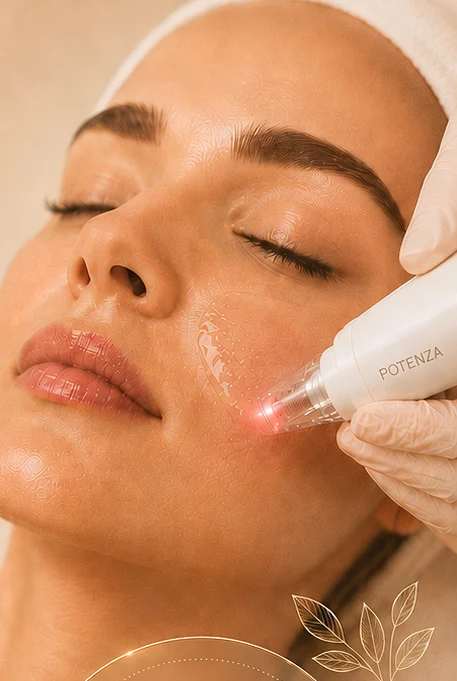
Potenza RF microneedling and fractional CO₂ laser resurfacing belong mainly in the later scar and texture conversation, after active acne is controlled. They do not prevent every new breakout and are not first-line treatments for an inflamed cystic flare. Microneedling-based radiofrequency may be considered for selected atrophic scars and texture, while fractional ablative resurfacing may offer more intensive remodelling for suitable patients. Both can cause redness, swelling, crusting or temporary sensitivity; pigment alteration, infection and scarring are uncommon but important risks. Skin type, scar pattern, downtime, cold-sore history and tendency toward keloids must be assessed, and some patients need referral rather than a procedure.
A staged combination plan
Stage one is assessment. We document whether lesions are mainly comedonal, inflammatory, nodular or possibly another skin condition, then review products, medicines, hormonal clues, picking, previous reactions and scar tendency. Stage two is control. The patient follows a tolerable home and, when required, prescriber-led plan long enough to judge response, often at least eight to twelve weeks. A suitable peel or other conservative in-clinic adjunct may be added only when it supports that plan. Stage three is maintenance. Visits become less frequent as breakouts stabilize, with sunscreen and pigment-safe care protecting the progress.
Stage four is scar and mark assessment. Once inflammatory acne is stable, residual brown marks, persistent redness, ice-pick scars, rolling scars, boxcar scars and raised scars are assessed separately. No single device corrects every scar type. A plan may combine pigment-safe skincare, targeted procedures and, when appropriate, RF microneedling or fractional resurfacing over several sessions. Some deep scars need techniques or specialist care not offered in every clinic. The goal is meaningful, gradual improvement—not poreless skin, a guaranteed percentage change or the erasure of all scars.
During consultation, ask what the proposed treatment is meant to change, how many sessions are reasonable, what downtime and aftercare to expect, and what would make the plan stop or change. Report increasing pain, blistering, spreading redness, pus, fever, eye symptoms or an unexpected pigment change promptly. Good acne care is collaborative: the patient understands the role and limits of each step, the clinic avoids unnecessary procedures during active inflammation, and medical referral remains available when the pattern falls outside cosmetic care.
Build an acne plan around your skin
Book a consultation in Markham to review active breakouts, products, skin tone, marks and scars. We will explain which concerns can be managed in clinic, which treatment links are relevant, and when a medical or dermatology assessment should come first.
Book a consultationEight quick questions. One plan for you.
Area, concern, desired result, budget and timing. The clinic replies with suggested programs and payment choices.