How to choose a skin tightening treatment
Understand the differences between Thermage radiofrequency and Ultherapy ultrasound, and how to judge whether modest tightening suits your goals.

The word “loose” can describe several things in the mirror. You might mean a fine crease on the cheek, a softer jawline or a fold of excess skin on the neck. Pointing to the specific change you want helps a clinician judge whether a skin tightening treatment could make a visible difference.
When is tightening a reasonable goal?
Nonsurgical tightening tends to suit mild skin laxity. Results develop gradually and are generally modest. Someone hoping to remove a pronounced fold or see a substantial lift may find the likely change too small. Ask the clinician to show you which part of your concern they expect to improve and which part would remain visible.
Bring a photograph if you struggle to describe the change. A clinician can compare your concern with the way your skin moves and rests today. A photograph from years ago may help explain your priorities, even when recreating that appearance would be unrealistic.
Radiofrequency and ultrasound
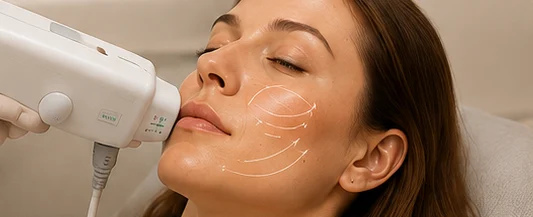
Thermage applies radiofrequency energy through a handpiece on the skin. Ultherapy uses focused ultrasound to deliver energy at selected depths, with ultrasound imaging to help the practitioner see the tissue. Both use heat to stimulate a gradual tissue response. Device choice depends on the area, your anatomy and the operator’s experience with that specific system.
What could change the plan?
Mention implanted devices, previous procedures in the area, medicines, pregnancy, and any rash or open wound. Thermage is contraindicated in people with a pacemaker or other implanted electrical device. Each system has its own restrictions. Elective treatment should wait if the area has an active infection.
Discuss discomfort during treatment and how long tenderness or swelling may last. Ask about burns and changes in sensation, how the clinic handles these problems, and when new or persistent symptoms should prompt a call.
Common questions
When should I evaluate the result?
Agree on a follow-up point measured in months. Comparable photographs taken at rest often make gradual changes easier to judge than daily mirror checks.
Should I commit to a second session now?
Ask what additional benefit the clinician expects, when the first treatment can be assessed and what would justify stopping after one session.