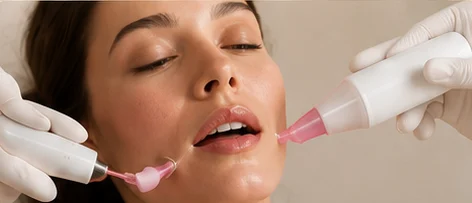
What a split-face study tells us about Thermage and Ultherapy
Read the head-to-head evidence for radiofrequency and focused ultrasound, and learn to judge before-and-after photographs of skin tightening.
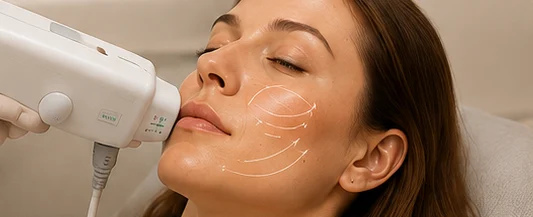
When Thermage and Ultherapy appear in separate before-and-after photographs, it is hard to know whether the devices made the difference. The people, lighting and starting points may all be different. One trial gave each participant both treatments, one on either side of the face. Its design helps answer a more precise question about mild to moderate skin laxity.
Why researchers compared two sides of the same face
Twenty people with mild to moderate looseness had monopolar radiofrequency on one side and focused ultrasound on the other. Random assignment determined which side received each treatment. The same person’s age, skin history and healing time applied to both sides. Evaluators who rated laxity did not know which treatment each side received.
Both sides improved on the study’s rating scale by day 30, with improvement still detectable at six months. The difference between the two sides was too small for this study to distinguish reliably. With just 20 participants, there is still room for differences that a larger trial might detect.
What a score can tell you about your jawline
A rating scale can pick up a change that a trained assessor sees. It does not tell you whether you would consider that change worth the cost or discomfort. Neither side went untreated, and six months of observation cannot establish how long an effect lasts beyond that point. Marked loose skin also falls outside the group studied.
Choose one feature that matters to you, such as the fold beneath your chin when you look straight ahead. Ask to see examples with the same chin angle, lighting, expression and distance from the camera. Check exactly when the follow-up picture was taken and whether the person received other treatments in between.
Questions the trial cannot settle for you
Thermage uses radiofrequency energy delivered from the surface. Ultherapy focuses ultrasound energy at selected depths and provides imaging of the tissue layers. Ask which tissue your clinician expects to treat and whether looseness, fullness or loss of volume best explains the change you see.
Your medical history can influence the choice regardless of the study scores. Solta lists a pacemaker or another active implant as a contraindication for Thermage. Burns and blistering can occur. Ultrasound treatment can cause numbness or temporary weakness. Before deciding, ask how the clinician would handle a complication in your proposed treatment area.
Common questions
Does a statistically similar result mean identical results?
No. With a small study, a real difference can be difficult to detect. Individuals can also experience different results even when group averages look similar.
When should I compare my own photographs?
Agree on a follow-up interval before treatment. The trial assessed change over months. Take baseline photographs with the same camera, posture and lighting you can reproduce at follow-up.