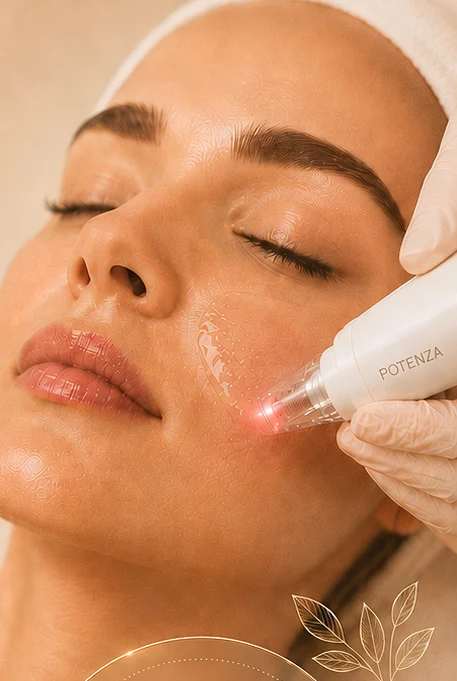
Visible facial pores: deciding between skin care and resurfacing
If your nose looks dotted when you lean into the mirror but looks smooth from across the sink, start with the view that matters to you. Pores are normal openings around hair follicles through which oil reaches the skin surface. Their appearance can change with oiliness, clogged follicles, loss of skin firmness and the shadows cast by the surrounding skin. You can sometimes make them less conspicuous. No treatment can give living skin the uniformly blank surface of a filtered photograph. A useful goal might be for makeup to sit more evenly on your cheeks or for fewer blackheads to develop around your nose.
Which dots are you seeing?
Look at the pattern in ordinary daylight. A field of similar, small greyish dots across the nose can represent sebaceous filaments, the normal material lining a follicle. A darker, more distinct plug may be a blackhead. Neither is evidence that you have failed to wash thoroughly. Squeezing can make the surrounding skin swell or leave a mark while the follicle continues to produce oil. If a strip or extraction temporarily changes the appearance and the dots return, that is a reason to revisit the goal before repeating the same treatment more aggressively.
Cheeks can tell a different story. If you can trace an individual depression back to a painful spot that healed there, the concern may be an acne scar. A routine intended to reduce clogging cannot lift an established depression. Conversely, resurfacing an old scar does little to prevent tomorrow's inflamed spot. If you have tender bumps as well as indents, mention both during your visit. The clinic's guide to active acne explains how a clinician can help choose which problem to address first.
Build a routine your skin can tolerate
Start by listing what touches your face over the course of an ordinary day. A morning scrub, an acid toner, a retinol serum and a medicated night wash may each sound reasonable on its own. Taken together they can leave skin tight and sore, making rough edges stand out under foundation. A gentle wash with lukewarm water and a moisturiser you can comfortably use are a simpler starting point. Look for products labelled non-comedogenic if you tend to develop clogged pores. Bring the actual labels to a consultation if several products contain similar ingredients.
For someone with blackheads and oily skin, a salicylic acid cleanser may help clear material from follicles. Introduce one change at a time and follow the product directions. Record whether new blackheads are forming and whether washing leaves your skin comfortable. If a product causes persistent irritation, put it aside and ask a pharmacist or clinician for advice. Adding a second exfoliant to push through burning makes it harder to tell what is helping. A change copied from a friend with oily skin may be a poor fit if your cheeks are already dry.
A retinoid may be worth discussing if acne or loss of firmness is part of the picture. Take your medication list, especially if you already use a prescription acne cream. Combining products that act in a similar way can add irritation without solving a new problem. Avoid retinoids during pregnancy, and check with your clinician before using them while trying to conceive or breastfeeding. Daily broad-spectrum sun protection also belongs in the discussion. The American Academy of Dermatology recommends a water-resistant sunscreen of SPF 30 or higher to help limit sun damage that can make pores more apparent.
What a laser study actually measured
In a randomized study published in 2024, twenty-five people received one type of fractional laser on one side of the face and another type on the other side. Investigators found fewer pores detectable on images on both sides at follow-up. The paired design helps account for differences between people, since each person serves as their own comparison. It describes changes in the appearance captured by the imaging system. It cannot establish that follicles disappeared, that the same benefit will persist for years or that every patient will see a worthwhile difference in the mirror.
Before considering a procedure, ask where the clinician expects improvement and why. Someone with old, shallow cheek scars might value a small improvement in texture even if the nose looks unchanged. Someone troubled only by a shiny forehead at the end of a shift may prefer to adjust skin care or makeup. The clinic's laser resurfacing guide describes recovery considerations. Ask to see examples that match the part of the face, the concern and the skin tone being assessed. A photograph of deep acne scarring answers a different question from one showing otherwise healthy skin with visible follicles.
Weigh downtime against the size of the concern
Ask what you might feel during the session, how long redness or swelling could last and when it is reasonable to wear sunscreen or makeup again. Depending on the procedure, there can also be crusting, a burn, infection, lasting changes in colour or scarring. Tell the provider if minor scratches or spots usually leave dark marks, or if you have had cold sores near the treatment area. Discuss recent tanning and any prescriptions that affect your skin. These details can change whether to treat, how much skin to treat and when to schedule the visit.
Think through the days after treatment before choosing a date. If your job in Markham involves long periods outdoors, ask how you would protect healing skin and whether the timing fits your shifts. If you need makeup for an event, ask about a realistic interval before applying it. Leave with written instructions about cleansing and restarting active products. Know whom to contact if pain increases, blisters develop or redness spreads. An explanation of expected recovery is most helpful when it also tells you which changes need attention.
Reassess at a normal viewing distance
Choose one consistent way to judge the outcome. You might note whether foundation settles into the same patch of cheek or whether blackheads need less attention over a typical month. If you use photographs, keep the lighting, camera distance, makeup and time of day similar. A freshly moisturised face beside a window will look different from an oily face lit from above, even on the same afternoon. Before agreeing to another session, look at your original goal and the amount of improvement you can see without magnification.
If the change is visible only when you enlarge two photographs side by side, it is reasonable to stop. Some people find that a comfortable routine and better control of acne address the part of the problem that bothered them most. Others value a modest change in cheek texture enough to consider a procedure. Either decision can be revisited. A useful consultation leaves you with a clear description of what you are treating, the likely trade-offs and a way to judge the result for yourself.