Laser skin resurfacing in Markham: choosing an approach and planning recovery
Start with what you would like to change
On a video call, a dark patch and a shallow acne scar can look surprisingly similar. In daylight, one stays the same colour as you turn your head, while the other casts a shadow that changes with the light. These observations give a clinician different starting points. Laser resurfacing aims to change the skin's surface or the supporting tissue underneath. It may soften fine lines, roughness and certain depressed scars. Before choosing a laser, point out one or two features you want to change and describe when you notice them. This makes it easier to judge whether resurfacing offers a worthwhile benefit.
Consider two people with lines around the mouth. One sees fine creases even when her face is relaxed. Another sees a deep fold that appears mainly when she smiles. Resurfacing may soften the first person's surface lines. It is unlikely to substantially change the movement or deeper loss of support behind the second person's fold. A changing mole, an area that bleeds or a sore that has not healed deserves medical assessment before any cosmetic procedure. A diagnosis matters especially when the target is a single spot you can identify, rather than a broad area of established texture change.
Two different questions hidden in a laser's name
The first question is what the laser does to the treated skin. An ablative laser removes a controlled amount of tissue at the surface. A non-ablative laser delivers heat into the skin while leaving much of the outer barrier intact. The second question is how much of the area receives that treatment. A fractional laser treats many small columns within an area, leaving intervening tissue to help it heal. Full-field ablation treats a continuous surface. Both ablative and non-ablative lasers can be fractional. If someone offers you a fractional treatment, you still need to know which kind and what your recovery would involve.
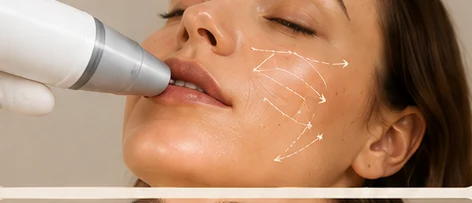
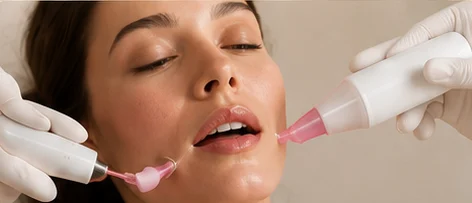
A brand name alone gives little guidance about the amount of healing ahead. Even within one laser family, a focused procedure for cheek scars and more extensive resurfacing can require different care. Ask the clinician to describe what your face is likely to look and feel like when you go home, which areas will be treated and when you can return to skin care and make-up. If you are comparing specific options, read about fractional CO₂ laser and Fotona resurfacing, then ask how the proposed treatment addresses your particular goal.
How much improvement can the evidence predict?
Some of the most informative studies treat one side of a person's face differently from the other, then compare the healed sides. This limits the effect of differences in age and individual healing. A small split-face study compared ablative and non-ablative fractional treatment in people with depressed acne scars. A separate controlled trial examined fractional CO₂ treatment for these scars. These studies give clinicians a basis for discussing improvement in scar texture. They cannot tell you the exact change to expect in a particular scar or establish the best approach to every type of sun damage or facial line.
Ask what counts as an improvement in the examples you are shown. A smoother overall cheek may still have visible deep pits. Photographs taken from the front under soft light can hide a depression that is obvious with light from the side. Ask to see results after the early swelling has settled, using comparable lighting and expression. If a scar is tethered to tissue underneath, or if discolouration is the main concern, another approach may make more sense. The acne scar guide explains why two marks on the same cheek sometimes need different treatments.
Make an individual plan before booking
Bring a list of prescribed medicines, non-prescription skin products and any recent cosmetic procedures. Mention cold sores, persistent dark or light marks after injury, slow healing and any tendency to develop thick or raised scars. Include recent sun exposure and how easily your skin develops uneven colour after a breakout. These details help a clinician assess the risk of infection, pigment changes or scarring and decide whether to postpone, adjust the plan or suggest another option. Ask for individual instructions about medicines and skin products. Make any changes to prescribed treatment in consultation with the person who prescribes it.
Location matters as well. If your main concern is on the neck or chest, ask what recovery and results are realistic for that particular area before relying on facial photographs. For treatment close to the eyes, ask what eye protection will be used for you and the treatment team. If comfort measures or medicines may affect your ability to drive, arrange transportation in advance. Patients in Markham who commute, work outdoors or routinely wear fitted protective equipment should describe those activities. A plan needs to account for sun exposure, friction and the ability to care for healing skin at work.
Plan for healing in stages
Recovery has more than one milestone. After ablative treatment, the surface may be swollen, raw or weepy before fresh skin covers it. That surface can close while residual pinkness or changes in colour remain noticeable. Non-ablative treatment often has a shorter visible recovery, although swelling, tenderness or temporary redness may still affect your plans. Ask when you are likely to be comfortable in public, when you can safely resume make-up and when to expect the first meaningful review of texture. Those are separate questions, particularly if you are planning a procedure around a wedding, travel or photographs.
Get written instructions on cleansing, any recommended dressing or ointment and how to protect the area from sun as it heals. Know whom you can contact outside regular clinic hours. Picking, scrubbing or restarting an irritating product too soon can disrupt healing. Increasing pain after initial improvement, spreading redness, fever, pus or a new cluster of painful blisters deserves prompt medical advice. Eye pain or a change in vision after a facial procedure needs urgent assessment. Tell the treating team which symptom appeared first and when it began, so they can direct you to appropriate care.
Decide what would make another session worthwhile
Choose a baseline photograph and a practical goal before treatment. For example, you might want cheek texture to look more even in natural side lighting, or want lipstick to sit more smoothly along fine lines. At follow-up, compare your skin under similar conditions and discuss what still bothers you. If colour has temporarily changed, ask whether waiting longer would give a clearer picture of the outcome. Surface closure generally comes well before the final assessment of texture, and an early photograph can be misleading. Ask what would justify another session and what stopping after this one would mean.
Before you commit, request a written estimate that explains the area to be treated, expected follow-up and any additional care or future sessions being proposed. Compare the likely benefit with the time you can set aside for recovery and the amount of uncertainty you are comfortable accepting. It is reasonable to choose observation when the feature is subtle or the recovery would disrupt your life. At a Markham consultation, bring photographs of the feature in the light where it bothers you most. Leave with a clear description of your options, the risks that apply to your skin and the plan if healing takes longer than expected.